

Inventory management software Stock that never buys twice
UGLA builds every item's name from reference lists, so one product cannot be entered under five names and bought five times. Stock, transfers, purchasing and stocktakes run on the same data as the till.
Stock and purchasing
For every industry
What it does
Names from reference lists
The full name is built from the type, short name, brand, marking, pack and unit, so a duplicate cannot be created. That is 6–17% less spent on purchasing in manufacturing, construction and venues with their own kitchen, 2.5–4% in retail.
Every location's stock
Warehouses, shops, kitchens and workshops as subdivisions of a legal entity, transfers between them and each location's stock.
Purchasing
Supplier orders, waybills against the order, and claims.
A supplier's new price
A waybill with a new price re-costs the dishes on the menu at once.
HoReCa
Stocktakes
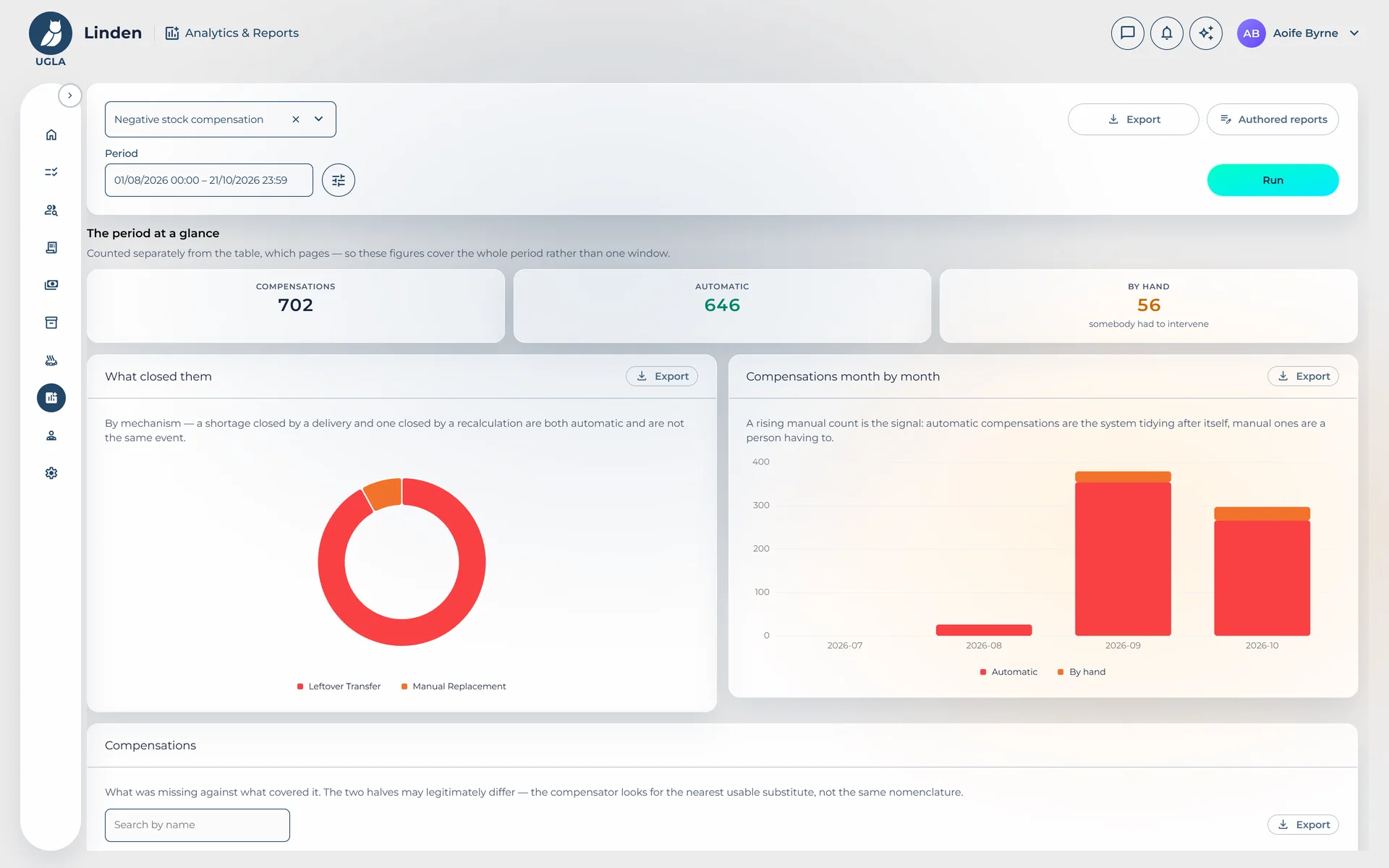
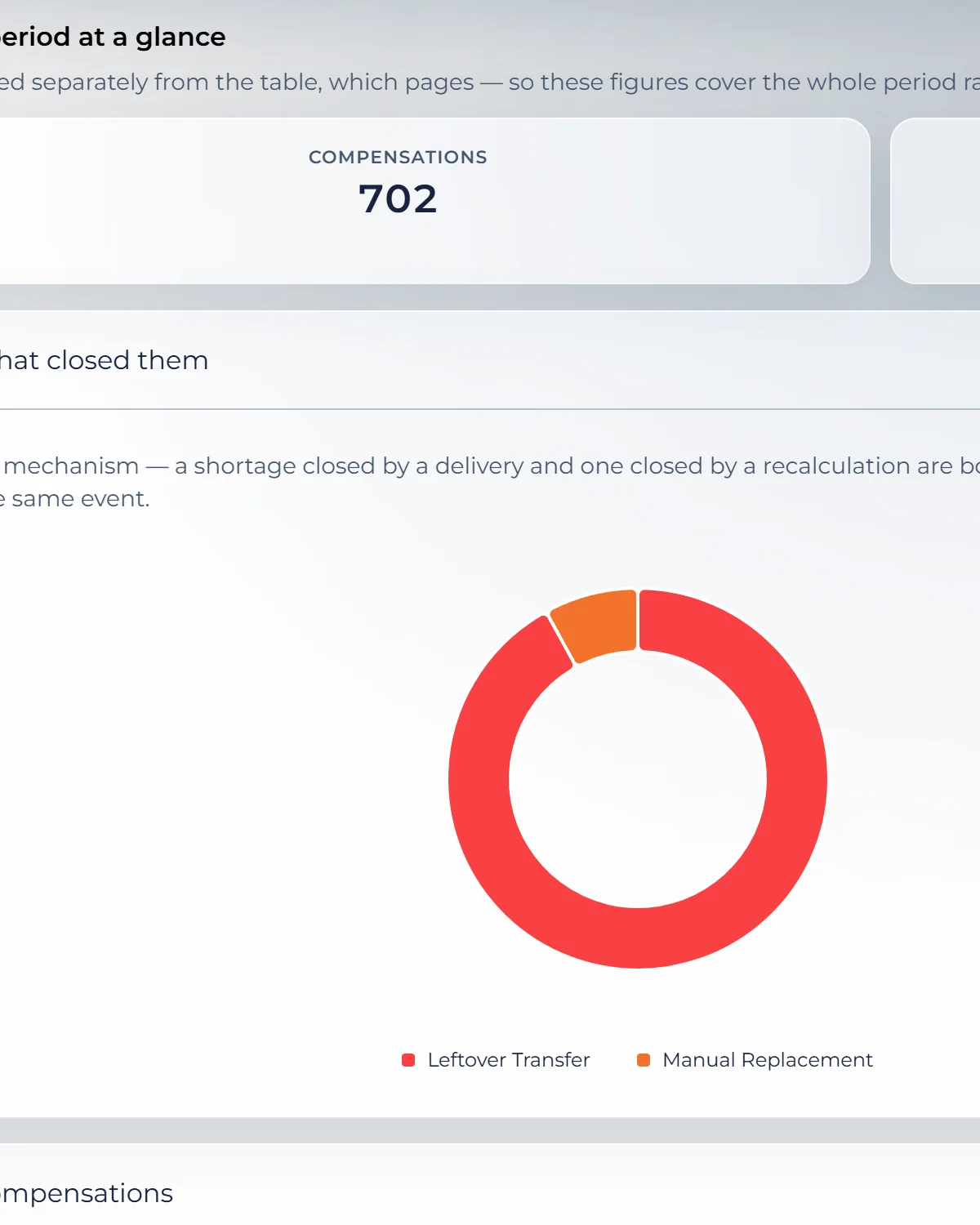
The count is compared with the calculated stock, and negative stock is compensated and shown in a report.
Smart supply-chain planning
Purchase planning that takes a team at least two working days takes 5–10 minutes.
Retail · Manufacturing
Size grids and labels
Grids for goods and products, labels printed from your own templates.
Retail · Manufacturing
Materials on site
Materials, vehicles and services per site, and the materials left on each.
Construction
Inventory and equipment
Equipment in your warehouses with a maintenance calendar.
Services
One name per product
The storekeeper writes “tomato”, the buyer “tomato, red”, the accountant “red tomatoes”. In an ordinary nomenclature that is five products and five purchases. UGLA builds the name from reference lists, so the product exists once.
- items for one tomato
- 5
- separate purchases
- 5
- seen under “Tomato red” of 12.4 kg in stock
- 4.2 kg

Connects to
Where the data goes next
No module stands alone: what happens in it, the others see at once.
Common questions
Where does 6–17% come from?
It is the share of purchasing saved once duplicates are gone: 6–17% in manufacturing, construction and venues with their own kitchen, 2.5–4% in retail. A large manufacturer found 17% of its items were duplicates before its first purchase in UGLA. It is a range, not a guarantee: work it out for your own purchasing on your industry's page.
How many items can we have?
No limit: the number of items and recipe cards does not change the price.
Can we move from BAS without stopping work?
Yes. The UGLA team moves your reference lists, stock and history, and for a month you work in both in parallel. Data migration is free until 31 December 2026.