


Ukrainian ERP where everything is already connected
Finance, inventory, production processes, sales, HR and documents — in one system. With solutions for your industry: restaurants, manufacturing, retail, construction and services. Start with one area and add the rest when you're ready. And the built-in AI assistant answers any question about your business in plain language. Request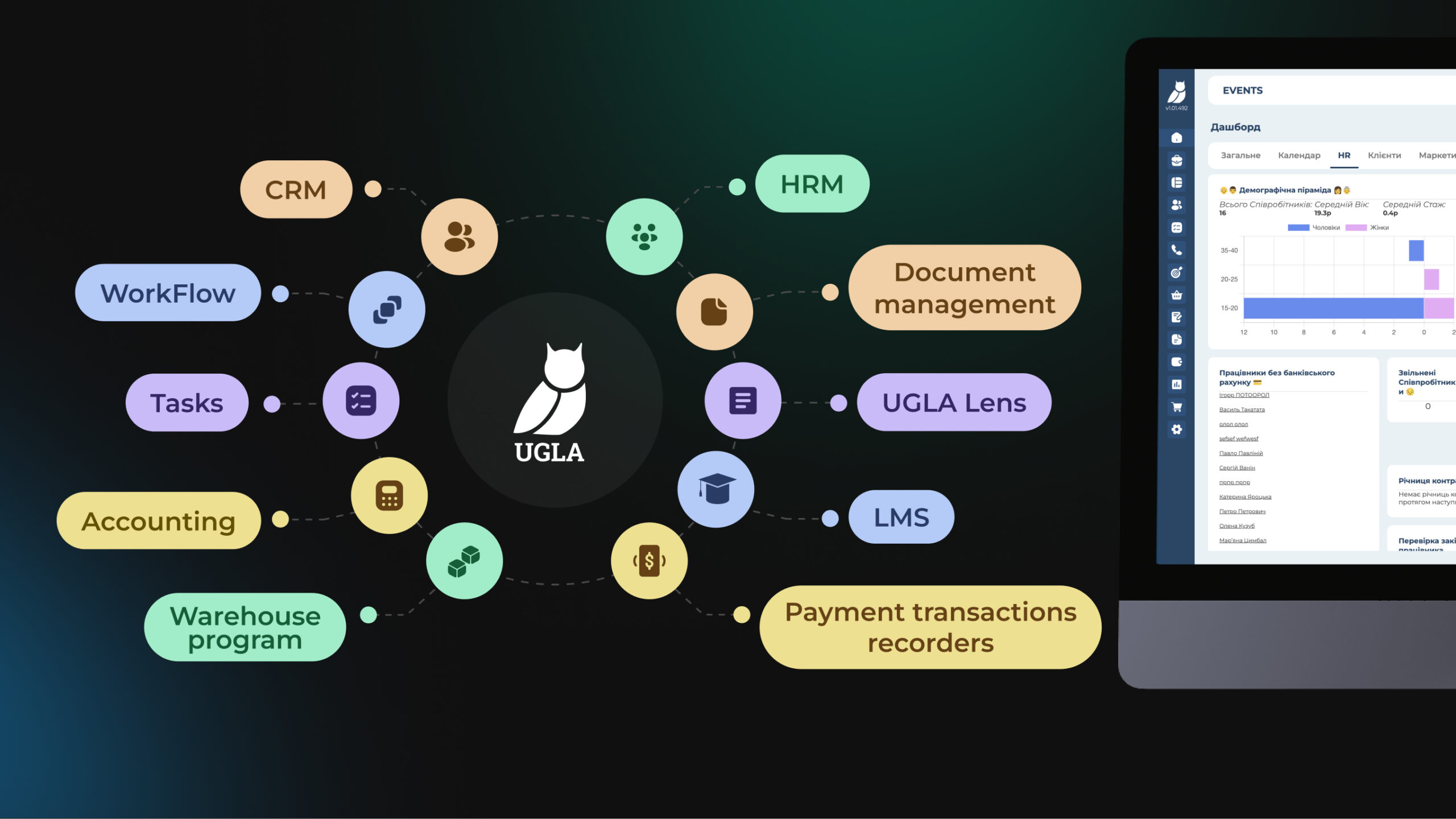
Grows with your business
From a single venue or workshop to a holding with multiple legal entities and countries — without switching systems. Cloud, any device, data protected under ISO/IEC 27001.

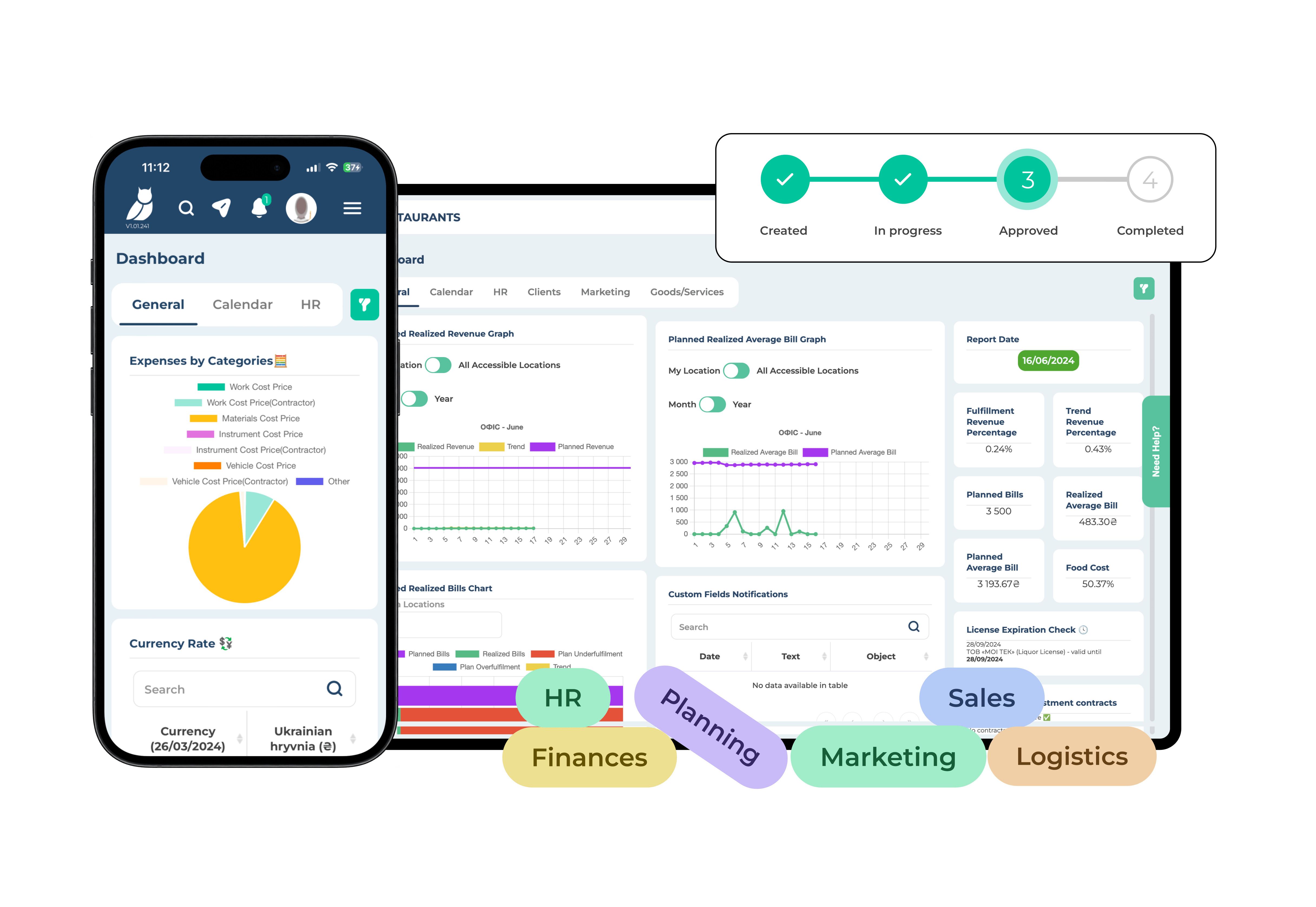
Strategic planning
Сommunication between all departments
Logistics, warehouse, goods
Marketing, sales
Pricing, finance
Customer Care
Human resources management

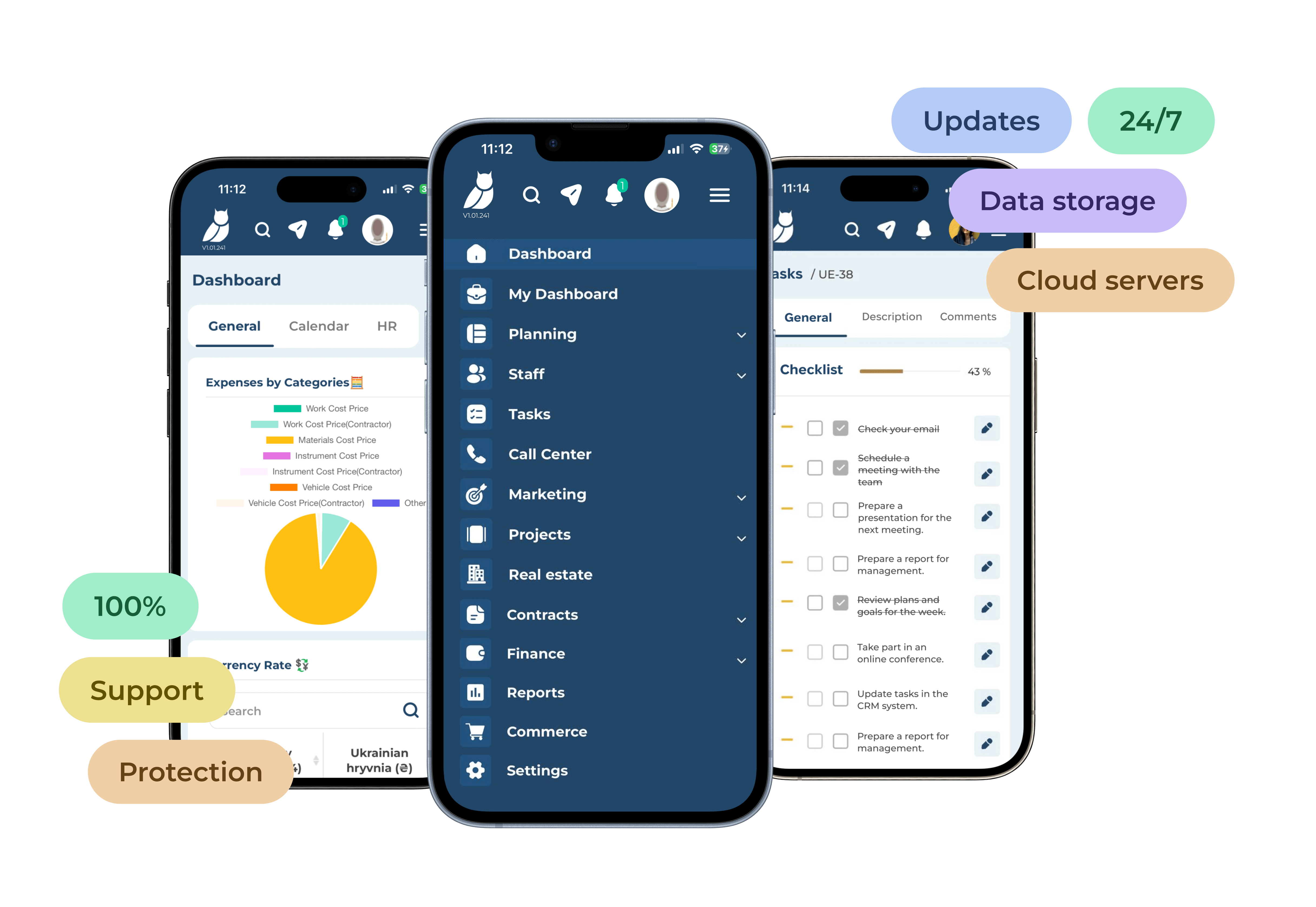
24/7 support
Continuous improvement and updates
Impossibility of external interference
Data loss prevention
Data storage on cloud servers

Access Anywhere
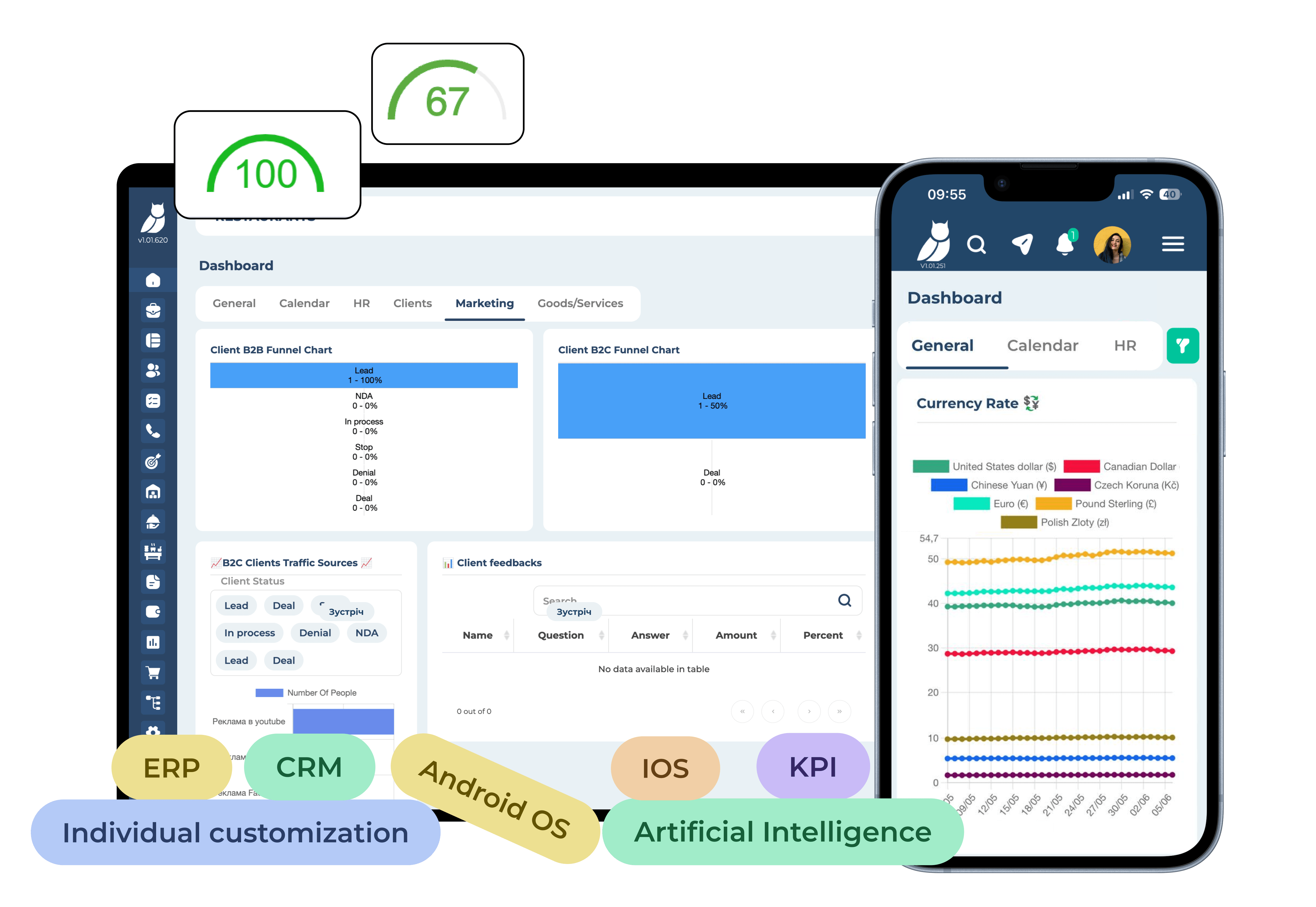
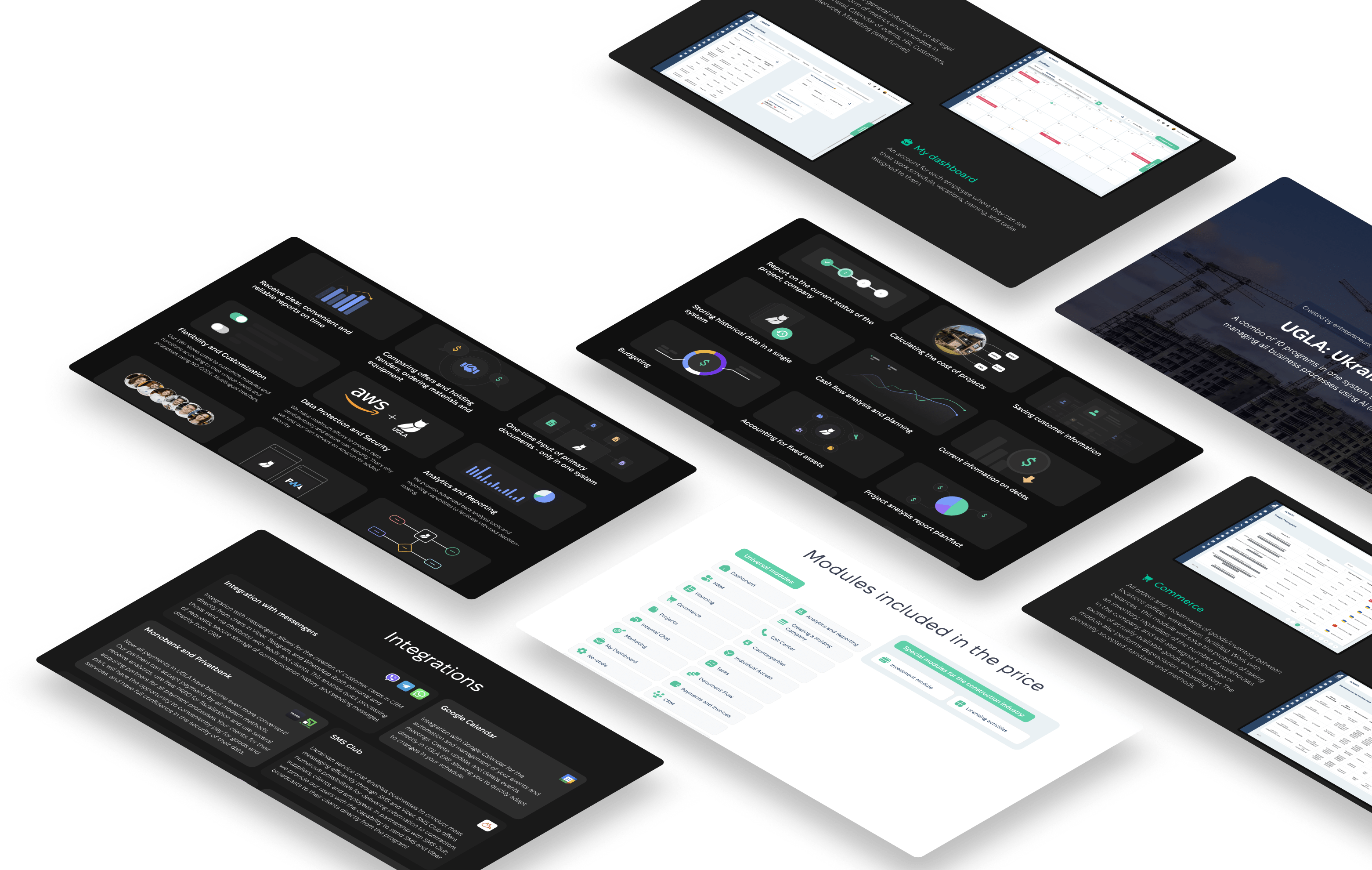
ERP and CRM functionality in the one system
Convenient and intuitively understandable interface
PWA for Android OS and iOS
Individual customization for any industry
Extensive implementation of artificial intelligence and machine learning algorithms
Display of key company metrics and KPIs in one window
Manage your business with ease!
Advantages of UGLA ERP
We've created the ultimate version of business process management — UGLA, a powerful and flexible solution that is easy to use.


Integrations
UGLA helps you collect, unify, and link all information about your business.
All integrations


Blog
What new in UGLA ERP?
View articles
#data security#partnerships
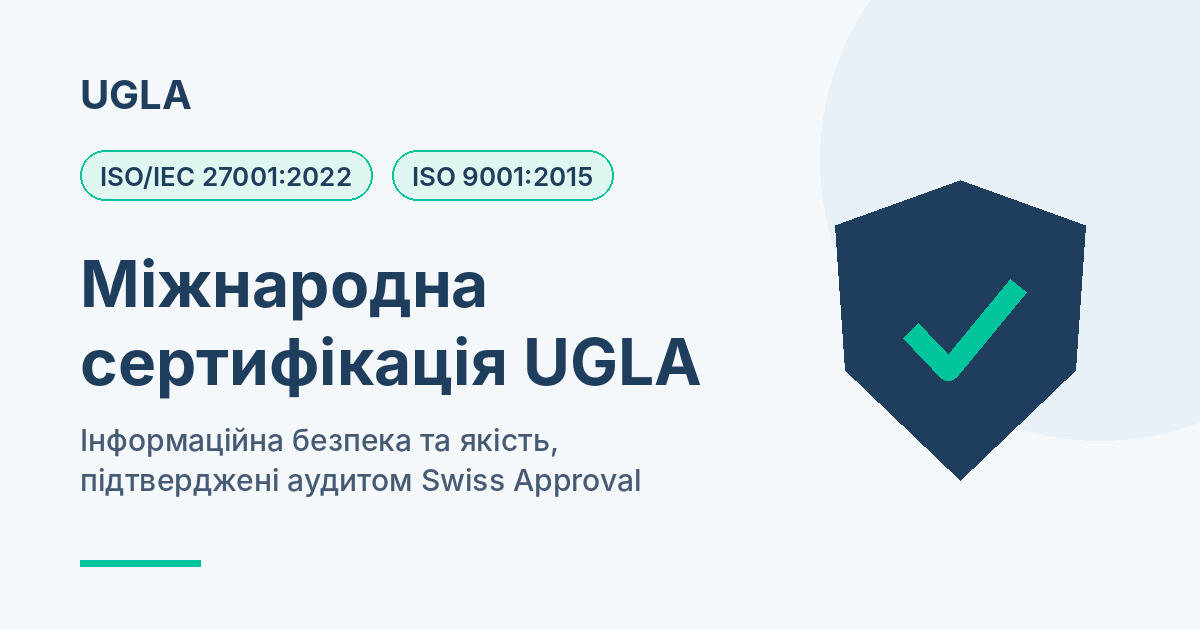
UGLA Achieves ISO/IEC 27001 and ISO 9001 International Certification
04.10.2026 21:43
An external audit by Swiss Approval confirmed that UGLA's processes meet international standards for information security and quality management.
Want to receive a complete presentation about our product? Fill out the form.
FAQ
What is ERP?
ERP (Enterprise Resource Planning) is an integrated enterprise resource management system that consolidates various functions and business processes into a unified information flow.
What is the difference between ERP and CRM?
CRM (Customer Relationship Management) and ERP are used for different purposes. CRM focuses on interacting with customers and managing relationships with them, while ERP covers all aspects of enterprise resource management, including finance, production, logistics, and other areas.
What are the advantages of using ERP for business?
ERP promotes process optimization, increased efficiency, cost reduction, and improved resource management, leading to increased profitability.
Can ERP be used for small businesses?
No enterprise is too small for an ERP solution – being a small shop or café doesn't mean you can't operate like a corporate-scale business and leverage the benefits of intelligent business solutions, such as ERP, to optimize business processes.
What challenges can arise during ERP implementation?
Some common issues include resistance from staff, malfunctions during implementation, and inadequate project planning. It is crucial to have a clear plan and carry out phased implementation.
What scalability opportunities does ERP provide?
ERP offers various scalability opportunities, enabling enterprises to grow effectively and handle increased business volumes.